
Standing in the appliance aisle, most shoppers end up comparing sticker prices and drum photos. The faster route is to read the two labels every washer carries in the United States and Canada. One estimates what the machine will cost you to run, and the other certifies efficiency. Once you can read both, capacity and installation questions become much easier to settle.
In this guide
At a glance
| Design | Agitator and impeller top loaders clean differently |
|---|---|
| Labels | Yellow EnergyGuide estimates cost, blue ENERGY STAR certifies efficiency |
| Numbers | Higher IMEF and lower IWF mean lower running cost |
| Water | Certified full size models use 14 gallons per load |
| Fit | Measure the doorway, the pan and the hookup height |
1. Agitator or impeller changes the whole comparison
A traditional top load washer uses a tall agitator in the middle of the tub.
An impeller model replaces it with a low cone or disc that moves clothes against each other.
That single design choice drives water use, load capacity and how gently clothes are treated.
Impeller top loaders became popular because they are more energy and water efficient than agitator models.
Front load machines sit at the efficient end of the same scale, which matters if you keep a washer for a decade.
Deciding between the two styles first keeps you from comparing machines that were never in the same class.
2. Read the yellow label before the price tag
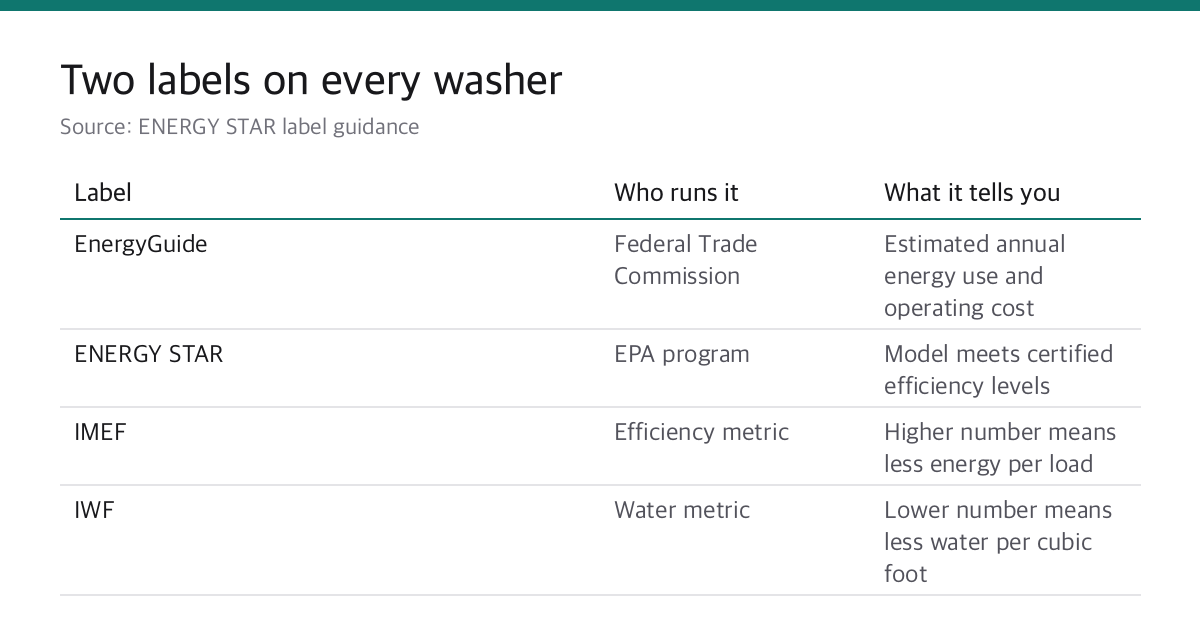
Every washer on a showroom floor carries a yellow EnergyGuide sticker.
The Federal Trade Commission manages that label, and it estimates annual energy use and operating cost.
The blue ENERGY STAR logo is a different thing: it certifies that the model met efficiency requirements.
A machine can carry the yellow label without carrying the blue one, so check for both.
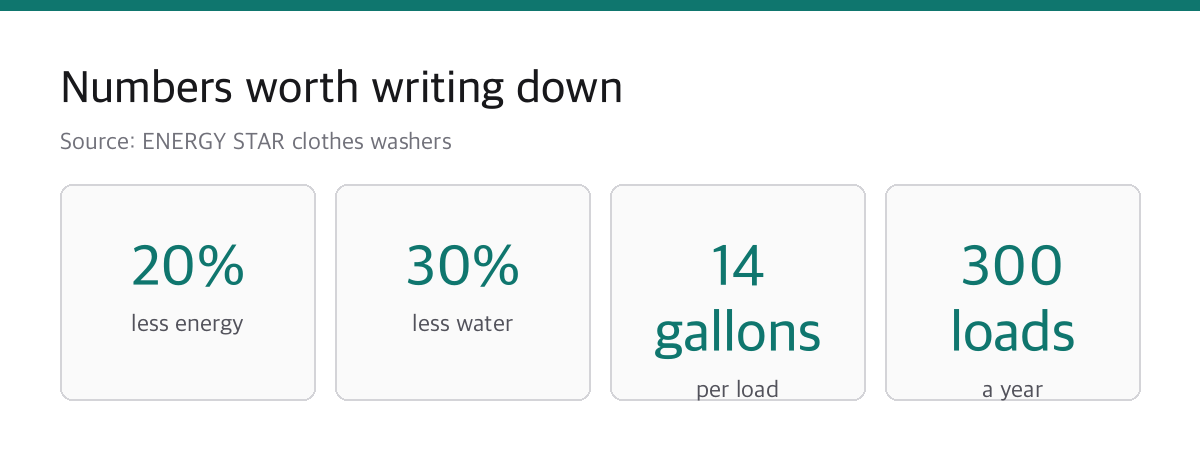
Certified washers use about 20% less energy and about 30% less water than regular models.
Over the life of the machine that difference is worth roughly five hundred dollars in energy costs.
| Label | What it means | Where shoppers misread |
|---|---|---|
| EnergyGuide | Estimated yearly energy use and cost | Read as a guarantee of your bill |
| ENERGY STAR | Certified efficiency level | Assumed to appear on every model |
| IMEF | Energy factor, higher is better | Confused with capacity |
| IWF | Water per cubic foot, lower is better | Ignored when comparing prices |
3. Turn IMEF and IWF into one comparison sheet
Two numbers do most of the work when you compare certified models.
Integrated Modified Energy Factor covers cycle energy, standby draw, water heating and drying energy.
A higher IMEF means the washer delivers the same laundry with less total energy.
Integrated Water Factor reports gallons consumed per cubic foot of capacity, so lower is better.
Both values are published for every certified model in the ENERGY STAR product finder.
Write the model number, IMEF, IWF and the EnergyGuide cost estimate in one row for each candidate.
With that sheet in hand, a lower sticker price with a weak label stops looking like a bargain.
4. Size the machine around the laundry you actually run
An average American household runs about three hundred loads of laundry each year.
That volume is why capacity should follow your routine rather than the largest drum on display.
Certified washers come in several widths and drum capacities, including stackable and under counter designs.
Removing a bulky agitator frees usable space, which helps with comforters and other large items.
If you wash small loads often, a huge drum simply means running it half empty.
Note how many loads you run each week before you shop, then match the drum to that number.
5. Check water, drainage and delivery access
Efficiency claims assume the machine is installed correctly and used as intended.
Full sized certified washers use 14 gallons of water per load against 20 gallons for a standard machine.
That saving only shows up if the drain, hookup height and hoses match the machine you ordered.
Measure the doorway, hallway turns and the laundry closet before delivery day.
A top loader needs clearance above the lid, so check any shelf or dryer stacking plan first.
Water efficiency programs from the EPA cover the rest of the home, and the same habit applies here.
6. Keep the paperwork you will need later
Save the EnergyGuide estimate, the model number and the receipt in one folder.
Utility rebates are often tied to certified models, and the paperwork is what proves eligibility.
Warranty claims move faster when the serial number and the delivery date are already recorded.
Photograph the installed hookups so a later service visit starts from a clear picture.
If the machine underperforms, those records show whether the issue is the model or the installation.
Sources checked for this guide
| Efficiency basics | ENERGY STAR clothes washers Open source |
|---|---|
| Label difference | ENERGY STAR on EnergyGuide versus ENERGY STAR Open source |
| Water efficiency | EPA WaterSense Open source |
This guide summarizes federal labeling programs for clothes washers in the United States. Energy and water figures come from ENERGY STAR program materials and describe typical certified models, not a specific machine. Check the EnergyGuide label, the product listing and your utility rebate rules before purchase.